Je mi nesmírně líto, že musím nový rok a prezentaci svých scrapbooků začínat zrovna příspěvkem na toto téma. Ale je to pro mne stejně samozřejmé, jako když jsem se včera večer na rychlou pobídku zvedla a vyrazila k francouzské ambasádě. Nahonem, bez svíčky, jen s pocitem, že by bylo dobré tam dojít a setkat se tam s pár známými i zatím neznámými, ovšem podobně smýšlejícími... Což se nakonec po chvíli bloudění i podařilo a následná krátká debata kousek od pietního místa i později cestou na tramvaj a v tramvaji byla hodně přínosná.
Tento obrázek jsem tedy před malou chvílí vytvořila na památku zavražděných redaktorů a karikaturistů pařížského magazínu Charlie Hebdo. Ať odpočívají v pokoji.
I'm really sorry that I have to start a new year and a presentation of my scrapbooks with a post on a topic like this. But it feels so natural for me as yesterday, when I got up after a quick incentive and went to the French embassy building. In a rush, without a candle or a flower, only with a feeling that it might be good to get there and meet with few mates as well as those people unknown to me, but most likely likeminded to me... So I went there after a short straying and the discussion that followed next to the memorial place and then on the way to the tram stop and in the tram was really worthy.
So I created this picture just a while ago in memory of the editors and cartoonists of the French magazine Charlie Hebdo, who were shot dead yesterday. May they rest in peace.
Tak zhruba nějak takhle vypadal můj uplynulý rok. Je zajímavé, kolik událostí v něm nějak souviselo se židy, aspoň podle těch fotek. Nu, uvědomuju si, že během něj spousta věcí nebylo právě ideálních a mnohdy jsem měla co dělat, abych ho psychicky, fyzicky a později i finančně zvládla. Na druhou stranu tam byl onen výrazný milník na začátku června, kdy se do centra mé pozornosti opět po čase dostal jeden neuvěřitelně inspirativní člověk, jehož virtuální přítomnost mi dokázala otočit mé myšlení, pozornost a zájmy naprosto neuvěřitelným způsobem a hlavně nočekávaným směrem, a to i přes to, že se na mé reálné situaci vcelku nic neměnilo, což obojí pokračuje až do dneška. Chci si samozřejmě tenhle zájem udržet i do budoucna, a proto sem dávám jeden takový "motivační obrázek" na příští rok, vytvořený tentokrát mou v poslední době oblíbenou technikou digitálního scrapbookingu, což jsou v podstatě takové vystřihovánky a skládanky pro dospělé. Určitě sem dám později i další mou tvorbu na tuhle notu, stejně tak jako fotografie, které vidíte na tom stromečku. Pro jistotu pro snazší orientaci (od spodní řady zleva nahoru):
znak města v ulici Na Příkopě,
Ústav šlechtičen na Pražském hradě,
chrám sv. Ignáce na Karlově náměstí,
Vyšehrad focený z Palackého mostu,
demonstrace na podporu Palestiny v Operaci Ochranné ostří, izraelská ambasáda,
reliéf na budově v ulici 28.října,
herečka Táňa Fischerová čte jména zavražděných nacisty za II. světové války na letošním dnu obětí holocaustu (Jom ha-šoa),
socha sv. Václava a v pozadí Národní muzeum, foceno během demonstrace na podporu Izraele během Operace Ochranné ostří,
chrám sv. Mikuláše, foceno ze zahrad pod Hradem,
podobizna Mordechaje Maisela na jeho bývalém domě v Josefově,
Hradčany, foceno z Vyšehradu.
----------------------------------------------------------------------------------------------------------------
So this is how my past year looked like. It's interesting how many events in it were somehow connected with the Jews, according to these photos. Well, I'm able to realize that quite a lot of things were not perfect at all that past year and it took me a lot of efforts to manage it in terms of my psychical, physical and later even financial conditions. On the other hand there was that significant milestone at the beginning of June, when one incredibly inspirative person went back to the centre of my attention after a long period of time, and his virtual presence managed to turn my thinkings, attentions and interests in absolutely unbelieveable and unexpected way and direction - despite the fact that there weren't any changes in my real life, that continues until today. Of course I would like to keep that interest for my future, so I'm posting here a "motivational" picture that I've made by using a lately favourited technique of mine, so called "digital scrapbooking" (that I see as a cutouts and puzzle for adults). I'm gonna certainly post here more pieces of my work made in this style, as well as these photos you can see on the Christmas tree above. Just for the case you couldn't recognize them (marked from the lowest row to the right and up):
a coat of arms of the city of Prague in the street "Na Příkopě",
The Institute for Noble Women on the Prague Castle,
a church of St. Ignatius on the Charles Square,
a church on Vyšehrad, photo captured from the Palacký bridge,
a protest march for supporting the Palestine during the Israel's Operation Protective Edge, opposite of the Embassy of the State of Israel,
a bas-relief on the building in the street of 28th October,
the actress Táňa Fischerová as reading the names of the Shoah victims at this year's Shoah Remembrance Day (Jom Ha-Shoah),
the statue of St. Wenceslas and in the background the National Museum on the Wenceslas Square, photo taken during a meeting for supporting Israel in the Operation Protective Edge,
the church of St. Nicholas on Little Quarter, as seen from the public gardens under the Prague Castle,
a portrait of Mordechai Maisel on his former house in the quarter of Josefov, a former Jewish medieval ghetto,
A tady je tedy ten slíbený můj motivační obrázek pro rok 2015. Myslím, že se mi hodně povedl, alespoň pokud se té symboliky týká. Bude totiž v tomto roce potřeba projít mnohými dveřmi do neznáma. Zvednout se z toho pohodlného křesla, uklidnit to vyděšené kotě, uvědomit si lásku, kterou už teď má člověk k dispozici, najít a vzít klíč k dalším dveřím, které mohou na cestě čekat, věřit v průvodce, které na té cestě člověk může potkat... Ty třešinky tam taky nejsou náhodou, ale jako odkaz na Rusko. A válejí se na zemi, stejně jako všechny informace o téhle zemi se pro mě během doby, kdy jsem se o ni nezajímala, válely v prachu u mých nohou a nestály mi za to, abych je zvedla.
----------------------------------------------------------------------------------------------------------------
And this is that promised motivational picture of mine for the year 2015. I think it turned out perfect, at least what concernes its symbolics. I indeed shall pass many doors into the unknown this year. I shall get up from that comfy armchair, calm that frightened kitty of my soul, realize the love that I already have, find and pick up the key to another door that may be waiting on my journey, I shall believe in guides that I may meet on that journey... Even those cherries aren't on the picture at random, but as a reference to Russia. And they are lying on the ground, as were all those informations about this country lying there for me, until I didn't start to pay attention to them and consider them worthy to pick them up.
Well, it really seems to me that those bursts of nostalgia, that keep showing in my life since June, tend to continue for some time yet. These days they are fed by one of my ex-schoolmates. He went to Venice on this summer for a trip and he shared his photos from this tour just a couple of weeks ago, including the one of the statue of a local playwright Carlo Goldoni, with a simple note „Something for you, LaMantha!“ It's really nice from him that he remembered me while spotting this statue and I'm sending big thanks to him for this.
Statue of Carlo Goldoni in Venice
Actually, why are we both remembering Carlo Goldoni? Because he was connected with the activity of the theatrical group at our high school that we both have been acting in for two seasons. An extract from his theatrical outputs was chosen for our first performance by our director Rudolf Faltejsek. In my opinion it was quite a lucky choice. We were young, so this mixture from old Italian commedias dell'arte was the right for us. Some of us „actors“ have been performing in another theatrical group at our school before, but it was really an amateurish job led by our Czech language teacher who lacked any practical experiences from the theatre. We have rehearsed a Christmas musical performance called „The Nativity Scene“, full of old Czech carols, that we have performed on a roof-less corridor of our school before Christmas holidays, and then another fairy-tale musical performance presented in a local city hall that I can hardly remember.
In contrast with this Mr Faltejsek chose a drama much challenging for his ensemble, namely the Roark Bradford's „Ol´ Man Adam an´ his Chillun / Ol´ King David an´ the Philistine Boys“. The ensemble of our schoolmates had above that a chance to peform in a much suitable area of the „Jesličky“ (The Crib) Theatre, that was used as a home stage for amateur actors from local school of arts. So the youth between their 15-20 years has got their first chances to meet the environment of a real theatre from behind the curtains, not only as the non-regular theatre visitors. That brings with it of course a familiarization with another professionals from the theatre – the curtain operators, lighting technician, the staff from the costumes & props rooms, the prompter... Our collegues passed their challenge well, their performance was very succesfull both at premiere and at reprises and even those students, who were labelled as less talented took their chance to excel in it.
The next year things changed – some boys and girls from Mr Faltejsek's ensemble quit, as well as most of us from the „competetive“ one of our Czech language teacher went conversely just to Mr Faltejsek's. So Mr Faltejsek as a director had a completely new ensemble of young people he either had never seen before, or met them only in our school rhetorical courses. Even some girls and boys from the first grade at our school joined us. And everything could for Mr Faltejsek start anew – the selection of a play to perform, adapting it for the number of the ensemble members and roles needed, casting of the roles, explaining the plot of the play to the cast, and finally that weekly repeated routine of rehearsals, that were held in our classrooms after finishing our classes. Well, that was the hardest part of the process – from time to time it was obvious (especially for the boys from our group) that many of us would prefer relaxation either by some sport, or with a nice mug of beer after all those hard school lessons, instead of another hours of memorizing the dialogues and rehearsing the interactions with co-performers. So it was quite uneasy to get the whole ensemble together on these rehearsals, although we were only about 15 members. Every time there was someone absent and we were forced to rehearse in pairs or groups according to the members who were present. But I think it's quite normal when performing in a theatre is not your regular job.
Well, as I wrote, for our performance we chose the Italian playwright Carlo Goldoni, from whose pieces (mostly from The Mistress of the Inn, A Servant to Two Masters and Brawling in Chioggia) a compilation was made for us by our director. And as life brings many surprises, I was casted to one of the lead roles – a girl who wants to marry against her father's wish. As I've mentioned in some of my previous blog post, I still was that shy girl from the Czech countryside, who was trying to become acclimatized to the life in a big city and who fought her jitters everytime she had to make some school presentation in front of her schoolmates. But actually all those jitters were for me an impulse to join Mr Faltejsek's theatrical ensemble – I simply wanted to get rid of them. And of course I wanted to know whether I'm able to cooperate with some group on a theatrical perfromance with everything that is connected with it. There are no doubts that Mr Faltejsek as an experienced actor himself and a director who used to work with amateur actors for many years before percieved my lack of self-confidence – but he didn't have any objections against me as a cast of my role, instead of casting some spunkier girl. So my „Beatrice“ was chaste, diffident – and reliable in what regards not forgetting the text of her role. Well, I hope I didn't dissapoint Mr Faltejsek much.
Having a chance to perform in a school theatrical ensemble was for me on the one hand a possibility to meet with my schoolmates that I would otherwise passed by at the corridors of our school, and secondly it was a big opportunity for working on myself, as I wrote before. It was just a leisure activity for me, but I already realized that I'm a part of a bigger team that is dependent on my performance. It was a kind of transformation from my childhood and young teenage years into young adultery, too – suddenly I wasn't just a kid with a schoolbag on my back, who just started her experiments with using the make-up, but I was forced to act as a girl suitable for marriage! The worse – my role involved a love scene, although performed only by sounds behind the scene! And it should be played by me, who wasn't paying much attention to opposite sex then and whose first real relationship between a boy and a girl was hidden deep in her future. But my schoolmates in our ensemble struggled the same problem, e.g. the role of my father was casted by a 15 year old boy from the first grade of our school. But I enjoyed this all – everything that I wouldn't allow to do myself in my real life was allowed or even ordered to me as a part of my role, as flirting with the boys or rejecting them, quarelling with my father, giving orders to my maid or to Truffaldino... I can even remember that I acted just in the opening scene, where the girls meet and chat by hanging the laundry – and I wasn't sure whether I will be able to do it „right“, since I wasn't used to do this in my real life.
Well, little by little we went more familiar together with my schoolmates and our roles, so there came a time for us to bring our rehearsals into the area of our theatre. It was a really small place, with only a few dozens of seats in the auditorium. But yet – a first meeting with a place like that... the first gathering of us - „the actors“ - on an empty stage, without any decorations or props (that we partially hunted for or even made by ourselves), with an empty auditorium (our guests were that moment sitting at school) and with only one light on and our director in front of us giving us some friendly advices... And then came our first careful steps on stage, as we started to rehearse in couples or grups as needed, practice the arrivals to the scene and leaving from there, we were tottering between the curtains, as we were moving from one side of the scene to another in the backstage... recalling on what side of the scene has someone left the paper with the text of his role or some of his props... And then there were those pauses for smokers, when „Truffaldino“ played us a Jaromír Nohavica's song „Swallow, fly!“ on a piano next to the stage, while me and one of my friends were chatting about total nonsenses then... And of course there were the first funny moments during our rehearsals, like that one, when the boys left their empty beer bottles at the wooden crate I should be standing at and talking „from inside the window of a house“ and then I was supposed to go down from the crate and „run to the front of the house“ - but I accidentally tumbled all the beer bottles down and as I went so frightened, I immediately forgot the text of my role.
Maybe this all seems so romantic to you... But in fact, it was a kind of work itself as well. One already knew that someone else wouldn't dare it or simply wouldn't manage to learn, say and perform these few sentences of his role, that were needed for about a hour lasting play. But I never had a feeling that need to step on the stage only to hear the applause and the word „Bravo!“ or for being admired for the way I took my role. That applause in my opinion belonged to the whole ensemble with the director and its purpose was to confirm us, that we created a good performance. Of course everyone steps on the stage to do his best.
Well, the time of our premiere has come, followed with all that bold make-up and hairstyles - we asked the girls from the make-up artist's branch of some high school to support us, and they were happy that they could use a really generous portion of their creativity for us. So my eye make-up was pink shaded for the premiere and green shaded for the rest of our performances, I wore two pigtails and the boy that played my father asked me if we are going to some kids party... First were we performing for the youngest students of our school, on afternoon there was a reprise for our parents and other guests and friends of the school, and the next day another one for the rest of our students. Of course I suffered from a big stage-fright before the premiere, but I was acknowledged again that if someone survives the first moments on the stage, his head turns somehow "off" and he can concentrate more on what he is actually doing and sayin than on the fact he is being gazed at with all the lights on. And my collegues suffered from the stage-fright even less - actually I remembered one mischievous joke that have our boys made towards the girls during their performance: there was a scene in the coffee shop, that the girls should visit and drink a toast with the shot of a liqueur (that was meant to be substituted with pure water, of course) there and then continue in their dialogues. But our boys substituted the water in the bottle with vodka without telling the girls - so they drank their shots and were almost unable to speak again in that shock, while the boys in the backstage could laugh their hearts. But besides that the premiere went all right into it's nice finish, when everyone on the stage (including poor Truffaldino) got married and the final fell of the curtains was followed with "So that's how everything ends. And what will be next? There's a carnival starting in Venice. And our theatre play remains as it is, and is allowed to make fun of everyone of us." We've got a big applause from our schoolmates, that returned to school then, and we had to wait a few hours for our afternoon's reprise. I remember that I almost gave up putting my make-up off and went for a lunch to one of local tearooms, where I sat in a rear room with a nice pot of a tea and a textbook (the test in the school really couldn't wait for our performance to be gone) and for sure with a screenplay of our play (what if my text was substituted with some chemistry formulas in my head?).
Our afternoon's premiere was perfomed the same way, except the fact that the girls watched the boys with the bottle in their hands carefully this time. Our parents and grandparents and other guests of our show were satisfied with our performances, as well as we were. But there slightly were these feelings of some routine after this reprise, that were connected with the knowledge, that tomorrow it will be the same for us, this time in a reprise for the rest of our older schoolmates. One simply knew when and how should he enter the scene and who will be in the backstage waiting for his own act when he returns. So the only thing that slightly started to get into my mind was the fact that with this performance is our all-year endeavour over and it won't be repeated with such ensemble anymore.
Of course we returned to our director Mr Faltejsek the next year. Our ensemble remained almost the same and we solved the question "what are we gonna perform this time?" again. This time we chose a Czech playwright Václav Kliment Klicpera and his comedy "Everyone Something for his Homeland". So the motive of a girl tempting to marry against the will of one of her parents (this time her mother's) remained the same. And so did the cast - with myself again in a role of this girl called Minka, a daughter of a town mayor and his bossy wife. The boy I chose to marry in this role was called Jesenský and this part was casted by "Truffaldino" from our previous performance - therefore a boy who had the most experiences in acting from all of us. I can only hope I didn't spoil our common act much. But there were many more suitors, that were presented to my throughout the performance and that would be more acceptable by my mother, because they seemed to her to have more credits for developing our country - but my Minka steadily refused all of these silly teachers, brewery owners and old wine distillery owners and let them marry her talkative neighbours, insisting to marry only Jesenský. In the end the will of her mom relented, it was proven that Jesenský has the most "credits for our homeland" from all of the adepts and even the most promising future, so the marriage could be celebrated between him and Minka.
And my feeleings about the preparation of this performance and the performance itself? This time I already knew what I should expect from it and what will be expected from me. The more could I concentrate for what my role demanded from me, instead of getting familiar with a new surroundings. Despite the fact that the role of my Minka this time was a bit eclipsed by her mom, that was more distinctive. There were no mischievousnesses throughout this performances, if I do not count that one that my schoolmate (who inspired me to write this post) just before the premiere got an idea to buy a bag of flour and sprinkled it all over his white miller's costume, so he could dust and strew it everywhere on the stage everytime he moved.
That's how we made our two school theatrical performances. We wanted to perform the next year, too, we already chose the play (it was "A Midsummer Night's Dream" from William Shakespeare), but we were unable to get our ensemble completed in that number of members that would be needed. Our older schoolmates already had their leaving school exams finished and entered various universities all around our country, my grade was just before these exams, so we had only a little time left for another things, the schoolmates from the third grade wanted to finish their exams in various languages and so on, and no one from the youngest students dared to join us. But what concerns me, I'm apparently able to remember all these moments and experiences even more than ten years after they happened. I didn't manage to step on the stage anymore after I finished my high school and university studies, up to now. The path of my life leads me in another direction so far. But I wouldn't hold myself back in case of a chance like this in the future. And of course I remember especially the patient and benevolent approach of our director Mr Faltejsek, who had to teach us all these theatrical basics - the pronounciation and working with our voice, the use of gestures and mimics, so we could get the character of our role as well as her momental mood... Fortunatelly it was obvious that Mr Faltejsek has got a lot of experiences with leading the ensembles of amateur actors of various age. A few months later one of my neighbours from our village even revealed to me that Mr Faltejsek was born and used to live there, too. And as a cherry on top was for me the information I found somewhere on the web that Mr Faltejsek is a schoolmate of famous Czech actors and playwrights Zdeněk Svěrák and Ladislav Smoljak (the authors of well-known fictional character Jára Cimrman), too. I'm quite glad I didn't know it before - it doesn't seem to be a good thing to help you with the stage-fright and shyness.
Anyway, I think it's good to thank in time to the people such as Mr Faltejsek, who try to transmit something good to others selflessly, push them towards something positive, help them to create something worthy, spend their time with them and share some precious moments together.
So at least for myself I want to say: "Mr Faltejsek - THANK YOU!"
Rudolf Faltejsek, our director (photo courtesy Ivo Mičkal)
There are few people that know about me that I'm quite a big fan of a "virtuall traveling", reading maps, reading about foreign countries and stuff like that. It's mostly due to my current health and financial situation that do not allow me travelling in my real life at the moment. So when I lately re-discovered the Russian singer Philipp Kirkorov for myself, it was just natural that Russia itself as a country will gain my attention, too. But I'm not only collecting the informations about the life in Russia or some nice places there. At the beginning of this month I checked the schedule of Philipp Kirkorov's tour for this month on his website, and since the names of the cities he's going to visit were really unknown for me, I decided to look for them in a map to get more familiar and orientated in them. And that's how I got the idea to put these informations into a single blog post to get a better and more complete image about what's Philipp Kirkorov in fact doing. I wrote this post in Czech language, too, to help my Czech friends (and other readers from the Czech Republic as well) gain the informations about the geography of the Russia. So everyone can now see what does a phrase "to be the King of the pop music scene in Russia" in fact mean. I hope it will make you as speechless and amazed as I was (and still am, since the tour continues and is getting to it's second half).
So firstly let's check a simple schedule of Philipp Kirkorov's activities in October, as presented on his official website:
1.10. - Moscow
3.10. - Sankt-Petersburg
5.10. - Moscow (the premiere of the musical "Phantom of the Opera")
6.10. - Kaluga
9.10. - Izhevsk
10.10. - Naberezhnye Chelny
11-10. - Yoshkar-Ola
12.10. - Cheboksary
13.10. - Nizhnyy Novgorod
14.10. - Penza
15.10. - Samara
16.10. - Ufa
17.10. - Moscow (as a guest on the concert of the singer Jasmin)
18.10. - Perm
19.-20.10. - Yekaterinburg
22.10. - Omsk
24.10. - Tomsk
25.10. - Kemerovo
26.10. - Barnaul
30.10. - Tula
31.10. - Oryol
Secondly, a few photos from the cities mentioned above (I do not own any rights to this photos, so I apologize to their authors for using them):
Moscow
Sankt-Petersburg
Kaluga
Izhevsk
Naberezhnye Chelny
Yoshkar-Ola
Cheboksary
Nizhnyy Novgorod
Penza
Samara
Ufa
Perm
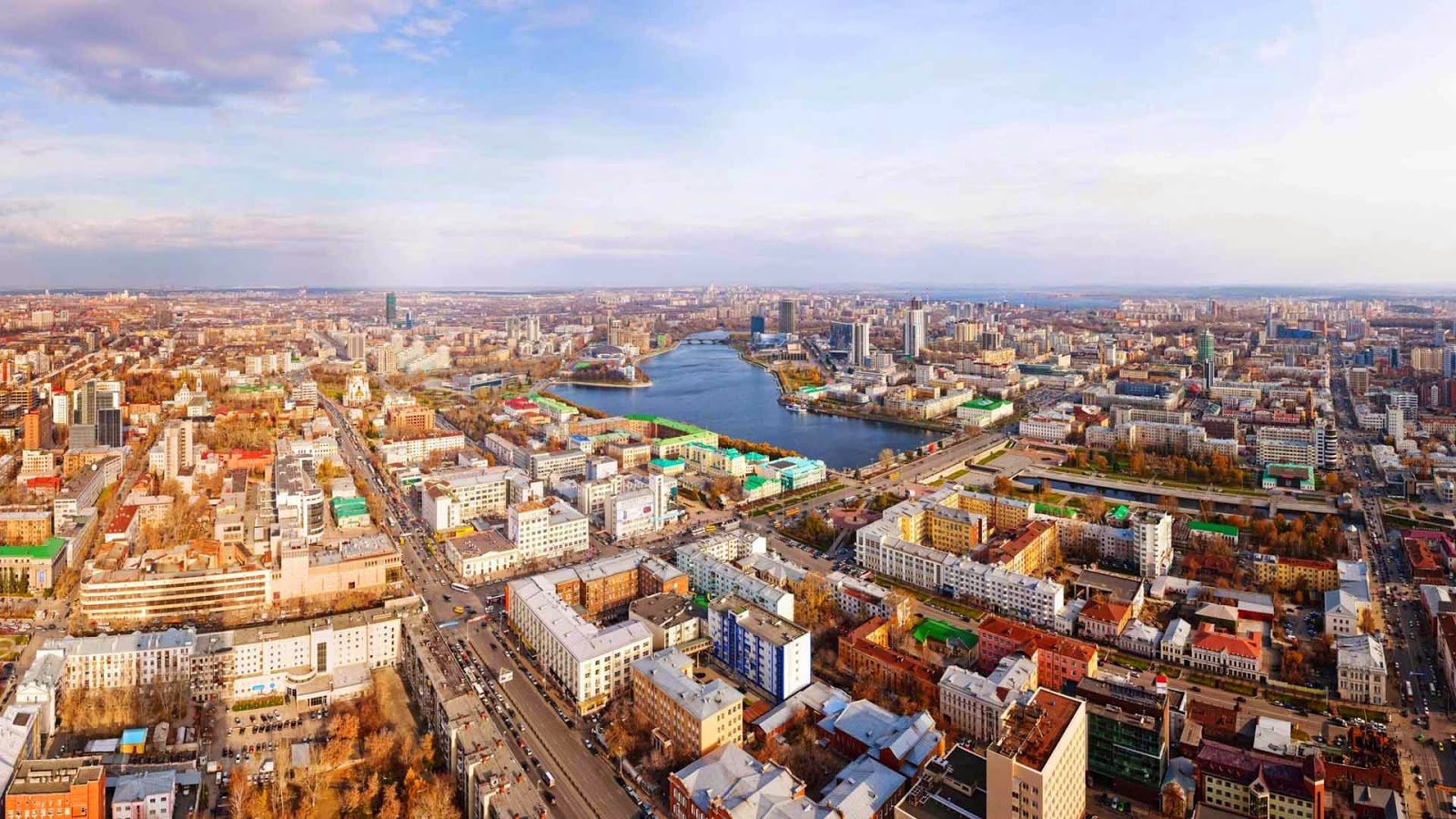
Yekaterinburg
Yekaterinburg
Omsk
Tomsk
Kemerovo
Barnaul
Tula
Oryol
So far so good. I've got a bit itchy feet to visit these places someday. But let's calm down and project the route of Philipp Kirkorov's tour on a map. I used the server Distancecalculator.globefeed.com for this. It offers the chance to display the route between two places on a map as well as it counts the distance in kilometers or miles and hours needed to travel. So my task was only to fill in the form a starting point (marked as "A" on the map - in fact it's a day before actual Philipp's concert) and a terminal point (marked as "B" - the day of current Philipp's concert). By the way, I wasn't quite happy when the schedule of Philipp's tour has changed, as he decided to turn back to Moscow at the beginning of the month (instead of travelling to Kaluga) and moved the concert in Tula from the beginning of October to it's end, while I was in between of capturing his route and creating all these maps... But I suppose it could have made more harm to him and especially to his fans over there than to myself. I only needed to adjust the maps to these new facts. So let's put your best boots on and be prepared for those long Russian distances - all the distances and the time needed are actually meant for travelling by car (not by plane or train that Philipp Kirkorov uses as well).
3.10. - Sankt-Petersburg (the distance between Moscow & Piter by car: 706 km, 9 hours 23 mins)
6.10. - Kaluga (the distance between Moscow & Kaluga by car: 181 km, 2 hours 25 mins)
9.10. - Izhevsk (the distance between Kaluga & Izhevsk by car: 1380 km, 17 hours 40 mins)
10.10. - Naberezhnye Chelny (the distance between Izhevsk & Naberezhnye Chelny by car: 197 km, 2 hours 40 mins)
11.10. - Yoshkar-Ola (the distance between Naberezhnye Chelny & Yoshkar-Ola by car: 409 km, 5 hours 29 mins)
12.10. - Cheboksary (the distance between Yoshkar-Ola & Cheboksary by car: 92 km, 1 hour 17 mins)
13.10. - Nizhnyy Novgorod (the distance between Cheboksary & Nizhnyy Novgorod by car: 244 km, 3 hours 20 mins)
14.10. - Penza (the distance between Nizhnyy Novgorod & Penza by car: 421 km, 5 hours 55 mins)
15.10. - Samara (the distance between Penza & Samara by car: 415 km, 5 hours 35 mins)
16.10. - Ufa (the distance between Samara & Ufa by car: 459 km, 6 hours 15 mins)
17.10. - Moscow (the distance between Ufa & Moscow by car: 1340 km, 17 hours 27 mins)
18.10. - Perm (the distance between Moscow & Perm by car: 1438 km, 19 hours 23 mins)
19.-20.10. - Yekaterinburg (the distance between Perm & Yekaterinburg by car: 358 km, 4 hours 38 mins)
22.10. - Omsk (the distance between Yekaterinburg & Omsk by car: 948 km, 13 hours 34 mins)
24.10. - Tomsk (the distance between Omsk & Tomsk by car: 896 km, 11 hours 56 mins)
25.10. - Kemerovo (the distance between Tomsk & Kemerovo by car: 218 km, 3 hours 16 mins)
26.10. - Barnaul (the distance between Kemerovo & Barnaul by car: 400 km, 5 hours 27 mins)
30.10. - Tula (the distance between Barnaul & Tula by car: 3679 km, 2 days 1 hour)
31.10. - Oryol (the distance between Tula & Oryol by car: 188 km, 2 hours 19 mins)
OK, let's imagine that it's the 31st of October now and look back at the route we (respectively Philipp Kirkorov with his show) have just finished, as a whole. Google Maps decided to show me the route that would concern only 10 localities put together, so I had to divide the route into the sequences. That's how it looks like:
My country - the Czech Republic - is just on the left...
Are your feet aching yet? Mine too, and my horse Rocinante refused to move onwards somewhere on the road between Samara and Ufa, I think... No wonder. Let's count the kilometers and time spent by travelling (supposing only using the car) - let the numbers speak:
The total length of the distance made by Philipp Kirkorov during October: 14.675 km
The total time needed to travel this distance by car: 196 hod 22 minutes (cca 8 days)
Well. The "King of the Russian pop" really isn't sitting on his "throne" somewhere in Moscow, spending the time watching his "vassals" from his window. He decided to travel amidst their crowds and gather the flowers from them by himself. There's no need to mention all these 2 and a half hours lasting shows he's performing on in each of the cities noted above... nor all these preparations of the scene, meetings with the fans, with the media or sometimes even with the city or region representatives... These are just the cherries on the top of the cake.
As
I've mentioned in one of my former posts, I started being interested
in the „King
of Russian pop-music“ Philipp Kirkorov again. So it was just a matter of time when the samples of his music found on his website or
those few dozens of his videos on YouTube would stop being sufficient
for me and I'll have to search for some records of his full concert,
as I did with the others artist of my interest (such as Mylene
Farmer, Garou, Eros Ramazzotti or Tina Turner). Of course I had to
consider the fact that for me there's no chance to attend some of his
shows personally at the moment, as well as had to accept the sad
truth that his musical outputs are beyond the reach of the official
distribution in our country. So I was really lucky to find on YouTube
a record of Philipp Kirkorov's full concert show „DruGOY“ from 2011 (performed in Moscow's Kremlin), that in fact was an
introduction to his concert tours all around Russia (and some
countries in the neighbourhood) that are lasting almost countinuously
until now, updated with new songs from time to time. A link to
the video you can find here – considering the length of the show
(almost 2:45 hours) I recommend a full download, especially if you have
a poor internet connection.
So
there was a record of the show „DruGOY“ available for me, with
some basic informations found on the web, such as „the most
expensive and fanciest concert show in Russia of all times, expensive
costumes, a precise choreography, 3D effects“. The rest was up to
myself to deduce, e.g.: if someone is able to travel all around
Russia with the same show for past three years and even go back to
the places he has already visited, the show must be pretty good and
have something more to offer to the audience. There's no equivalent
to this in our country, neither musicals, nor solo artists can't
afford this. The length of the show itself may be surprising as well
– how did Philipp Kirkorov force the audience to pay a full
attention to the artists on the stage and not get bored for so long?
I was sure that I'm gonna hear a lot of songs that are completely
unknown for me, too – will I like them, or even understand them (I
was still uncertain due to the language barrier)? I need to admit
that when I started to listen to Philipp Kirkorov's music this June I
found the songs sounding very much alike. I took me a while to get my
bearings in them and be able to differ one song from another and
older ones from the newest. So I supposed that these songs will be
well combined to keep the show diverse enough for the audience.
Today,
after I've watched the whole show „DruGOY“ for several times, I can say: yes, the show is diverse really enough. Even despite the
fact that the scene itself is equipped in an interesting, but quite
minimalistic way, as seen from our point of view. But this has its
own logic: Firstly – it seems to me that there's a habit in Russia
for the audience of such events being comfortabely seated over the
whole show. So there's no crowd of screaming fans right in front of
the stage, waving their hands or even throwing flowers or teddy bears
onto the stage. And secondly – the show itself is most likely
supposed to travel all around the country, so it's creators had to
adapt it for this huge concert hall in Kremlin as well as for the
smaller concert halls in such towns like Anapa (with 60.000
inhabitants). So the shape of the stage remains everywhere the same,
like in a theatre, no catwalk sticking up towards the audience, no
ramp that would move the artist over the heads of the spectators, no
sprinkling the audience with water, nor confetti falling on their
heads. But that's no harm to the quality of the show. From the very
first moment Philipp Kirkorov steps on the stage it's obvious,
that himself is the cornerstone of the whole show. Of course, he's
got a lot of brilliant dancers in fancy costumes there, that go
perfectly with his songs. And he's got backing vocalists and a band
there, too. But they are standing beyond the area of the main focus
at the scene. So the show is fully based only on Philipp, his
singing, costumes and his interaction with the dancers and the audience.
Philipp Kirkorov singing "Lyubov bez lyubvi"
From
the first moments of the concert the spectator like me may notice the giant leap that Philipp Kirkorov has made in the presentation of
himself as an artist and musician since 1999, when I first heard
about him. He gained a lot of experience in acting, for which he has
a natural and undeniable talent. For those, who do not know it like I
did, just a brief recall: he has been starring in several movies, TV
shows, a Russian version of the musical „Chicago“, and his own
clips could in my opinion be compared to those short movies of Mylene
Farmer – e.g. the songs „Sneg“ (The Snow) or „Mne ne zhal“
(I'm not Sorry). He is taking the benefits of his former studies at the prominent Moscow musical school (Gnessin State Musical College),
too. So there's no wonder that even in the weirdest costumes he is
able to perform as naturally as he is moving without it on the scene.
As a spectator I can see clearly how much this artist has worked on
himself over his 25 years long career to get straight to the top of
the musical scene, stay here for all these long years and even
move this top a nice bit upwards. He is very distinctive nowadays,
but without any negative obtrusion. He's only showing perfect
performances according to his own ideas, almost day by day, everytime
somewhere else all around Russia (from this you can see how devoted to his job he has
to be). Only the reactions of the audience stay the same, although
the need of hystericall screaming from adoring fans might slowly went
away, since Philipp is going in his 50's. Now there are the bouquets
on their turn instead. An unbelievable amount of bouquets everytime
and everywhere, as seen from my Czech point of view, e.g. only in this concert show in Kremlin Philipp takes them at least three times
during the whole evening and they still keep heaping at the front of
the scene in the end of the show. He even uses a tricycle with a
trailer to gather them, but they simply can't fit in.
But
let's go back to the show in Kremlin. A quick look at the playlist
can confirm us the fact that the leading motive of Philipp's songs is
still the love – either the one that a man is willing to gain or that is
somehow beyond his reach, as in songs „Gibnu ya“ (I'm Dying) or
„Bez tebya“ (Without You), or the relation that has already ended
or is going to it's end – like in „Sneg“ (Snow), „Ya
otpuskayu tebya“ (I Let You Go), „My tak nelepo razoshlis“ (We Broke So Ridiculously), „Zhestokaya lyubov“ (Cruel Love) or „Mne
ne zhal“ (I'm Not Sorry), or just like the relationship that
happily continues - „Ya prosto schastliv“ (I'm Just Happy), „Ya
tak lyublyu tebya“ (I Love You So Much) or „Ya za tebya umru“
(I Will Die For You). How to express it at the stage without slipping
into banality? Philipp Kirkorov chose a simple way: he works with the
„dynamic“ and „static“ part of the show. A dynamic one –
that are these changing costumes of himself or his dancers,
miscellaneous choreography, visualisation or video-effects, fireworks
etc. And a static one – that is always his most perfect performance
by each song, his most perfect showing of emotions he sings about,
but without any overacting. The structure of his songs is usually
quite uniform, with two strophas, two choruses and an instrumental
part that flows into a graded finish – all of this simplifies the
choreography as well as the dramaturgy of the whole show and even
helps the spectator with the orientation in what's on its turn now.
Speaking
about the choreography itself, the spectator may notice one thing
that is rather uncommon: Philipp even at the songs played in faster
tempo managed to avoid the frantic running all around the stage
connected with squeezing of liters of sweat from himself, smearing his
make-up off and sweeping hair, as well as the hopping of the
dancers in „Spartakiad“ style, when everyone moves the same as
the others. I hope that the times of such choreography will be kept
in his past, so he could choose the opposite way: the faster song,
the slower and for details and precision calling moves. The dancers
are divided either to couples or to mixed groups, from which every
single group makes its own choreography, cooperating with the rest
or with Philipp himself from time to time. That's why e.g. the
performance of the song „Ya etu zhizn za tebye otdam“ (I'll Give
My Life For You) rather reminds of a lesson of yoga or pilates, run
by dancers in bikini-styled costumes in a surroundings of amazingly
realistic waterfalls, with Philipp singing in front of them. It seems
to me that the main purpose of this kind of a choreography is rather to
highlight either a certain gesture, a placement of the dancers at the
stage or their fancy costumes, than to show their brilliant sport
performances that would push the audience into the bursts of applause.
Let's
say a few words about the costumes. Philipp himself is a separate
chapter in this – he changes his costume about 5 times throughout
the whole show, keeping up mostly the combination of various
embroidered jackets or cloaks with the pants, that are supplemented
with high boots, coloured scarf or caps in both civil or soldierlike
style. But he isn't affraid to wear shorts or kilt as a supplement to
the jacket, e.g. for the songs in the rhythm of Balkan disco at the
end of the show. The costumes of the dancers are even more variable –
speaking about the masks covering their faces (either in kind of
„Batman“ style as in the start of the show, or reminding of the
carneval in Venice at the tango „Gelosia“). The dancers can even
personify some regular jobs, such as a teacher, a sailor, a soldier,
a maid, a dustman etc., as showed in songs „V etot chas“ (In This
Hour) or „Znoynye nochi“ (Hot Nights), too. So to say, the luxury
keeps turning with the simplicity and fogyism. And the same applies to
the properties on the stage – the range goes from the device that
turns Philipp upside down at the start of the show, over the
fireworks at the front of the stage or placed on chandeliers (song
„Koroleva“ - „The Queen“), up to the simple wooden doors
(song „Gibnu ya“ - „I'm Dying“), the giant sofa („V etot
chas“ - „In This Hour“) or the giant suitcase („Znoynye
nochi“ - „Hot Nights“). The video-effects screened on the stage
follow this trend, too: from the simple ones like moving clouds
(„Verni mne muzyku“ - „Give Me Back The Music“), a sailboat
on the sea („Poleteli“ - „Let's Fly“) or a silhouette of a
castle („Zhestokaya lyubov“ - „Cruel Love“) up to the
complicated ones, such as imitated snow or real rain by the song
„Sneg“ („The Snow“). But there are few songs that break this trend – e.g. „Vernite mne krilya“ („Give Me
Back My Wings“) is performed only with Philipp standing alone in
front of a closed curtain. And of course I need to mention the
element that keeps passing through the whole show and connects all
the songs together – although I'm not quite sure whether I understood it correctly (due to the language barrier). It's that
shining ball of light (as shown in the logo of the show), most likely
of a magical character, that has the power to fulfill a man's wishes
and that is given to Philipp (as a young boy) at the start of the
show from the entity symbolizing the God. As the show continues
Philipp keeps returning to this God with the ball and talks with him
about his dreams, work, purpose of his life etc. and is being sent to
the stage over and over again. So let's summarize it all together:
there's a lot to watch in this show.
Philipp's
interaction with the audience may be taken as another level of the show. As I've mentioned before, there's no hystericall dancing under
the stage nor throwing various object towards the stage. But this
doesn't mean that Philipp wouldn't communicate with the audience –
on the contrary, there's no problem for him to walk amongst them
while singing, take bouquets from them, let himself being kissed on
cheeks from daring fans, or react on his close friends that are
sitting amongst them... So the camera notices the presence of
Philipp's father (a well-known singer Bedros Kirkorov), as well as
the presence of more people from the circuit of Philipp's
closest relatives and friends – his former wife and pop diva Alla
Pugacheva and her husband Maxim Galkin, Alla's daughter and another
famous singer Kristina Orbakaite (who was even dedicated one new song
by Philipp, simply called „Kristina“), Philipp's good friend and
a famous singer, too, Nikolay Baskov, with his girlfriend.... There
are even two female guests of Philipp that are performing during the
show – at first it is a well-known singer Ani Lorak from Ukraine,
that sings a duet „Gimn nezbyvshimsya mechtam“ („Anthem to unfulfilled dreams“) with Philipp, and later a young Russian
soprano opera singer Aida Garifullina with a very interesting version
of the duet „Golos“ (The Voice). And the audience is
encouraged by Philipp himself to some spontaneous reactions, too,
such as singing the chorus of the song „Zhestokaya lyubov“ (Cruel
Love) or dancing at the bonus songs that has Philipp taken from
Romanian-German DJ Shantel - „Sadagora Hot Dub / V sadu Edemovom“
(In the garden of Eden), „Disko Boy“ and „Disko Partizani“.
These songs are even performed as a highlight of the whole
show, as showed both on videos captured from the stage by Philipp
himself as well as on those from the fans.
Philipp with Kristina Orbakaite
So
what I'm gonna say to a nice end? It's clear enough that I haven't
been disappointed with this show. As I wrote before, I don't care
whether the songs that Philipp Kirkorov sings are his own or taken
from someone else. I even didn't care whether was he singing on
playback or not – but I noticed it at least 5 times during the
show. But this was quite acceptable – e.g. after the long block
of songs that Philipp sang live, or during his walks in the auditorium. Now I can say I understood all of the „why?“ or
„how?“ that I've had in my mind before watching the show - „Why
would anyone want to see a 3 year old show, that he / she has
probably already seen before?“ and „How does Philipp Kirkorov
force his audience to pay attention to him all the time?“. His shows, his music, that is a flow of concentrated
emotions. And as he is so devoted to music and to the audience and
worcoholic, he doesn't let his audience to take a rest by a single
song that they wouldn't love. They all are simply so precisely made
and performed. So I started to believe (and hope) that there are
still many challenges ahead of this artist and that he could even
beat this show. Actually, I've heard the news that during the show in
Kaluga just a few days ago Philipp himself has been talking about the first hints of his
new show that will follow this one... so let's see!
In
the Czech version of this blog post I addressed the next paragraph to
some of the Russian journalists again, especially to those that are
still unsatisfied with Philipp Kirkorov's performances or to those
that are even trying to judge his audience and fans. But I don't want
to sound so negative all the time speaking about them. As I'm getting
more informed about their reactions towards Philipp I can see that
they are not all the same and that lots of them even have only the
best experiences with him. Some of them even share their memories on
him at his younger age and the earlier part of his musical career,
what is a big plus for all the fans (especially for us from abroad).
And what I really enjoy are all these direct reactions from Philipp's
fans themselves. As you might noticed Philipp's summer tour with this
show „DruGOY“ turned into autumn one, leading him into the cities
he hasn't visited this year yet, such as Nizhny Novgorod, Samara,
Kaluga or Yekaterinburg. And the reactions of his fans from here are
just awesome – to state it simply, they are sharing their photos,
videos and words of praises on him right at the moment he gets down
from the stage after the show. And it's almost the same everywhere he
is: „You are awesome, Philipp! Keep on singing! Come to our city
again! I've already visited your concert for 5 times and I'm gonna
come again! I wish you a good health and good luck in your personal
and professional life! Take care, Philipp! I love you since I was a
kid and saw you on TV! That bouquet of roses coloured like a
Bulgarian flag is from ME!“ Or even better: „If someone told me
in the morning that in the evening I will be dancing on Philipp
Kirkorov's music, I would laugh right in his face!“ or „Actually,
my husband from Boston didn't like Philipp's music as I do, so I took
him on his live show – he watched it with a great astonishment and
now is his favourite song 'Poleteli'!“. It must be really great to
have such a fandom, the more if you realize that the cities these
praises are comming from are located hundreds of kilometers far from
each other. And these fans, just the ordinary girls, boys, men and
women from all over the Russia, keep the show from the palace of
Kremlin alive for so long up to these days.
Playlist:
Ты все увидишь сам / Ty vse uvidish sam (You'll See Everything On your Own)
Новый герой / Novyy geroy (New Hero)
Любов без любви / Lyubov bez lyubvi (Love without love)
Я отпускаю тебя / Ya otpuskayu tebya (I Let You Go)
Снег / Sneg (Snow)
Верните мне криля / Vernite mne krilya (Give Me Back My Wings)
Гибну я / Gibnu ya (I'm Dying)
Единственная моя / Yedinstvennaya moya (Only Mine)
Птица в груди / Ptitsa v grudi (Bird in a Chest)
Я такой нежзный / Ya takoy nezhnyy (I'm So Gentle)
В етот час / V etot chas (In This Hour)
Знойные ночи / Znoynyye nochi (Hot Nights)
Моя звезда / Moya zvezda (My Star)
Гимн незбывшимся мечтам - дует с Ани Лорак / Gimn nesbyvshimsya mechtam - duet with Ani Lorak (Anthem To Unfulfilled Dreams)
Я так люблю тебя / Ya tak lyublyu tebya (I Love You So Much)
Три счастливых дня / Tri schastlivykh dnya (Three Happy Days)
Полетели / Poleteli (Let's Fly)
Верни мне музыку / Verni mne muzyku (Give Me Music)
Я ету жизнь тебе отдам / Ya etu zhizn tebye otdam (I'll Give My Life For You)
Мы так нелепо рарошлись / My tak nelepo razoshlis (We Broke So Ridiculously)
Жестокая любов / Zhestokaya lyubov (Cruel Love)
Мое личное дело / Moye lichnoye delo (My Private Thing)
Gelosia
Дива / Diva
Голос - дует с Аидой Гарифуллиной / Golos - duet with Aida Garifullina (The Voice)
Королева / Koroleva (The Queen)
Я за тебя умру / Ya za tebya umru (I'll Die For You)
Без тебя / Bez tebya (Without You)
Я просто счастлив / Ya prosto schastliv (I'm Just Happy)
В саду Едемовом / V sadu Yedemovom (In the Garden of Eden)
Диско-бой / Disco Boy
Диско Партизани / Disco Partizani
Кристина / Kristina
Просто подари / Prosto podari (Just Give)
Мне не жаль / Mne ne zhal (I'm Not Sorry)
Струны / Struny (Strings)
A poster announcing the show "DruGOY" in Nizhny Novgorod


1.jpg)




1.jpg)


